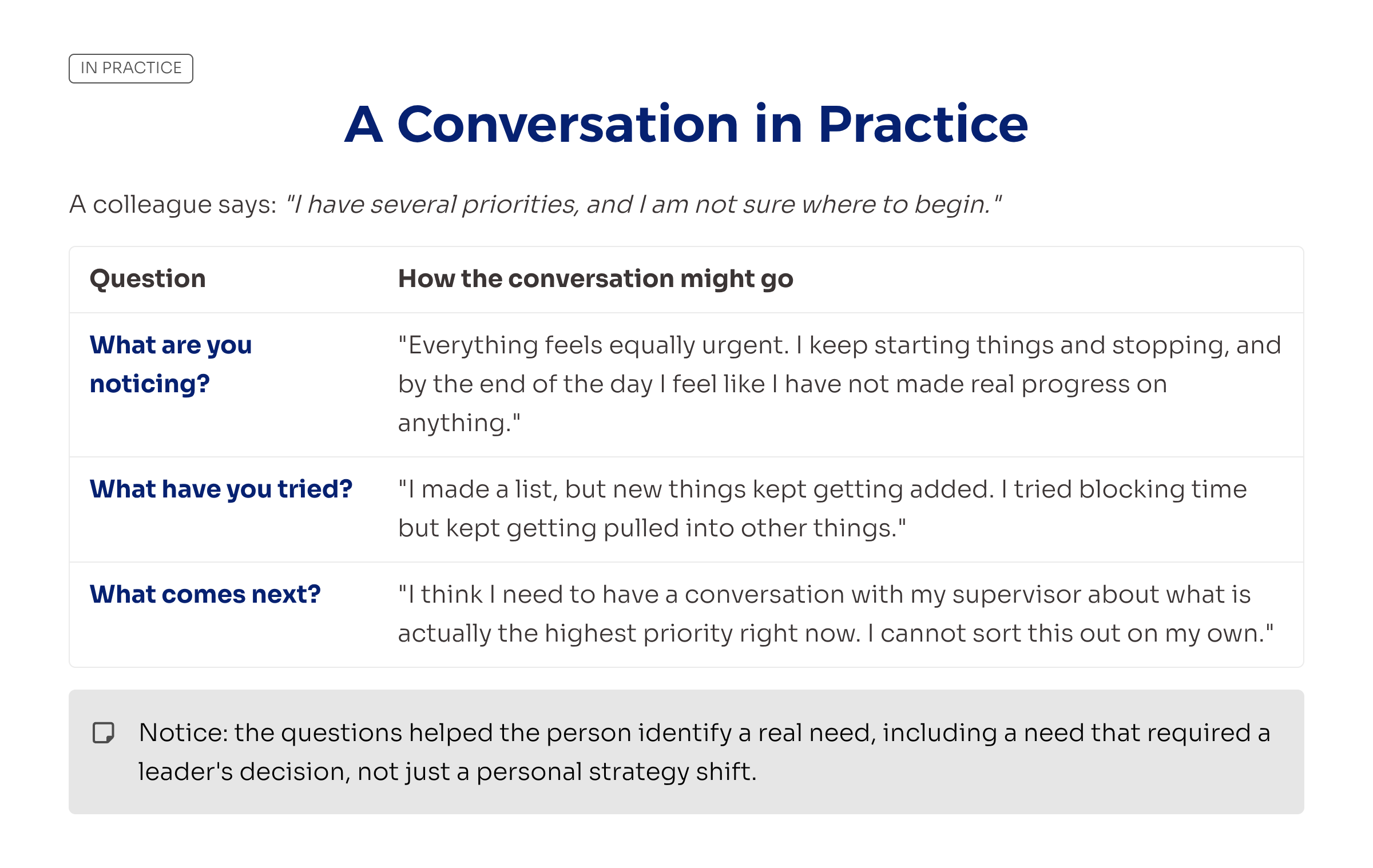
Next, when I want to support someone without taking over, I fall back on three questions. They work in coaching, learning support, and everyday problem-solving by keeping the focus on curiosity, listening, and choice.
If you do one thing, do this: ask one question, then wait long enough for a real answer. The common mistake is stacking questions back-to-back, which quietly pushes the other person toward your agenda. The fix is simple: ask, pause, reflect back what you heard, and only then move to the next question.
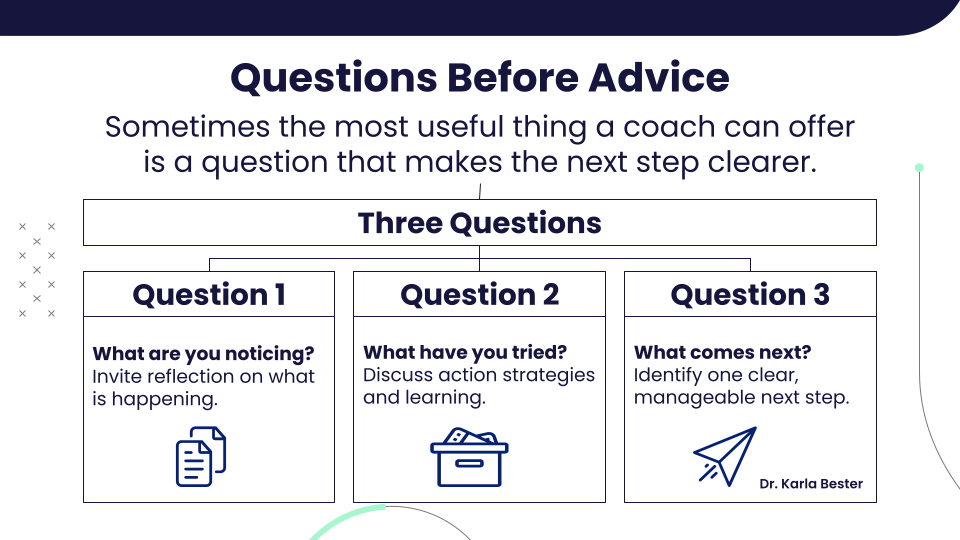
Here are the three additional questions as a repeatable loop:
What feels hardest about this right now?
What have you already tried, and what happened?
What would a good next step look like for you?
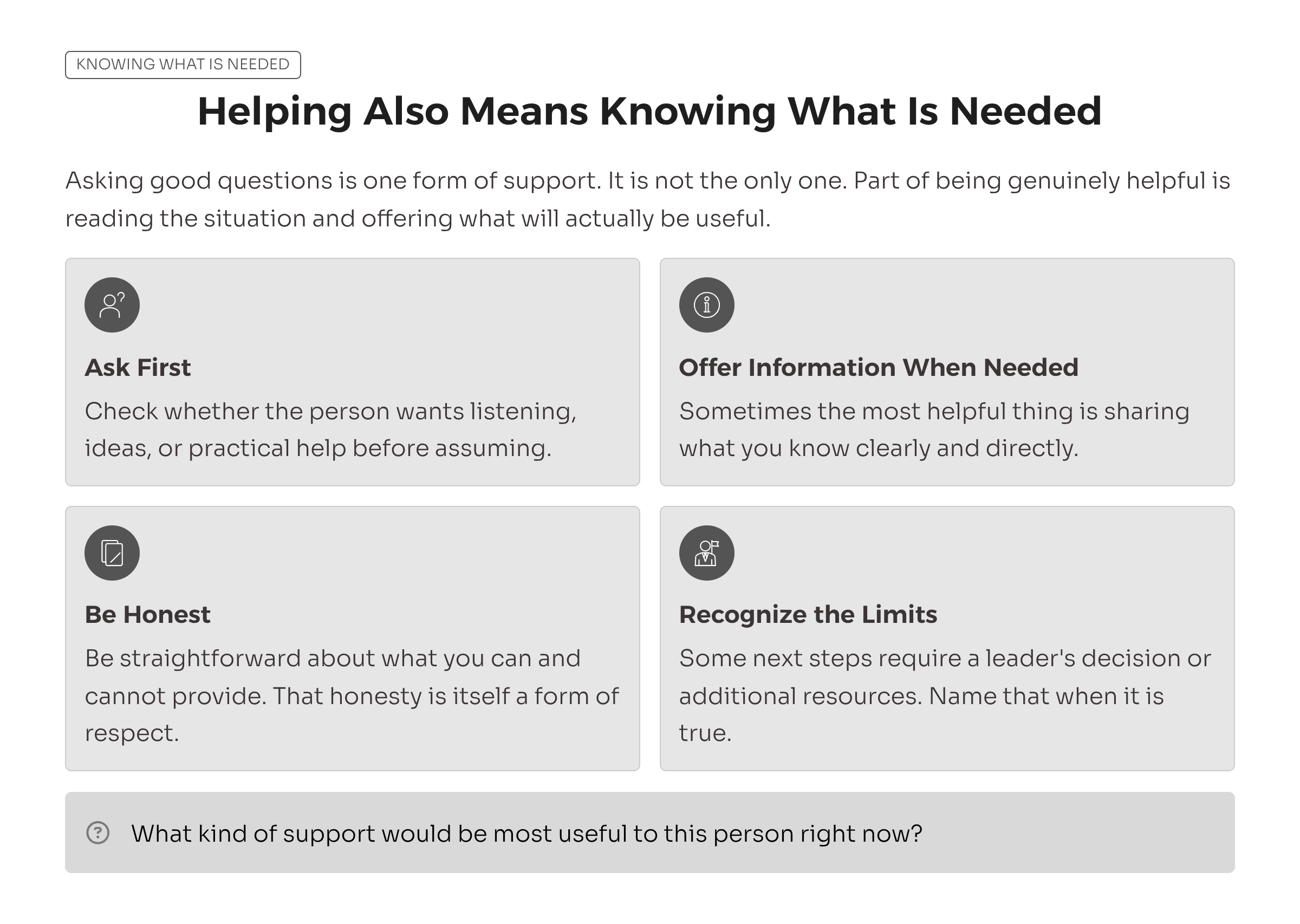
Works best when the person has room to think and wants to choose their own direction. Here’s the catch: if they are in immediate distress or there’s a safety issue, skip the open-ended loop and help them get immediate support first.
In practice, you can use this in 5 to 10 minutes in a 1:1, or in 2 minutes in a hallway chat. For example:
Learning support: A student says, “I keep failing quizzes,” and you find out they studied for 3 hours but only reread their notes, so they choose to try 15 minutes of recall practice per day.
The point is not to steer them to your preferred answer. It’s to help them hear themselves clearly, then choose their own next step and own it.