Stop Starting Softly

Center for Best Educational Solutions

Key Takeaways

  • Open with your purpose, request, or recommendation instead of burying it beneath unnecessary apologies or qualifiers.

  • Keep your warmth. Be specific and respectful, invite questions, and remain open to other perspectives without dismissing your own contribution.

  • Practice purposeful confidence. Rewrite one upcoming message with a stronger opening while keeping genuine apologies and acknowledging uncertainty when appropriate.

You open a new email and type: 

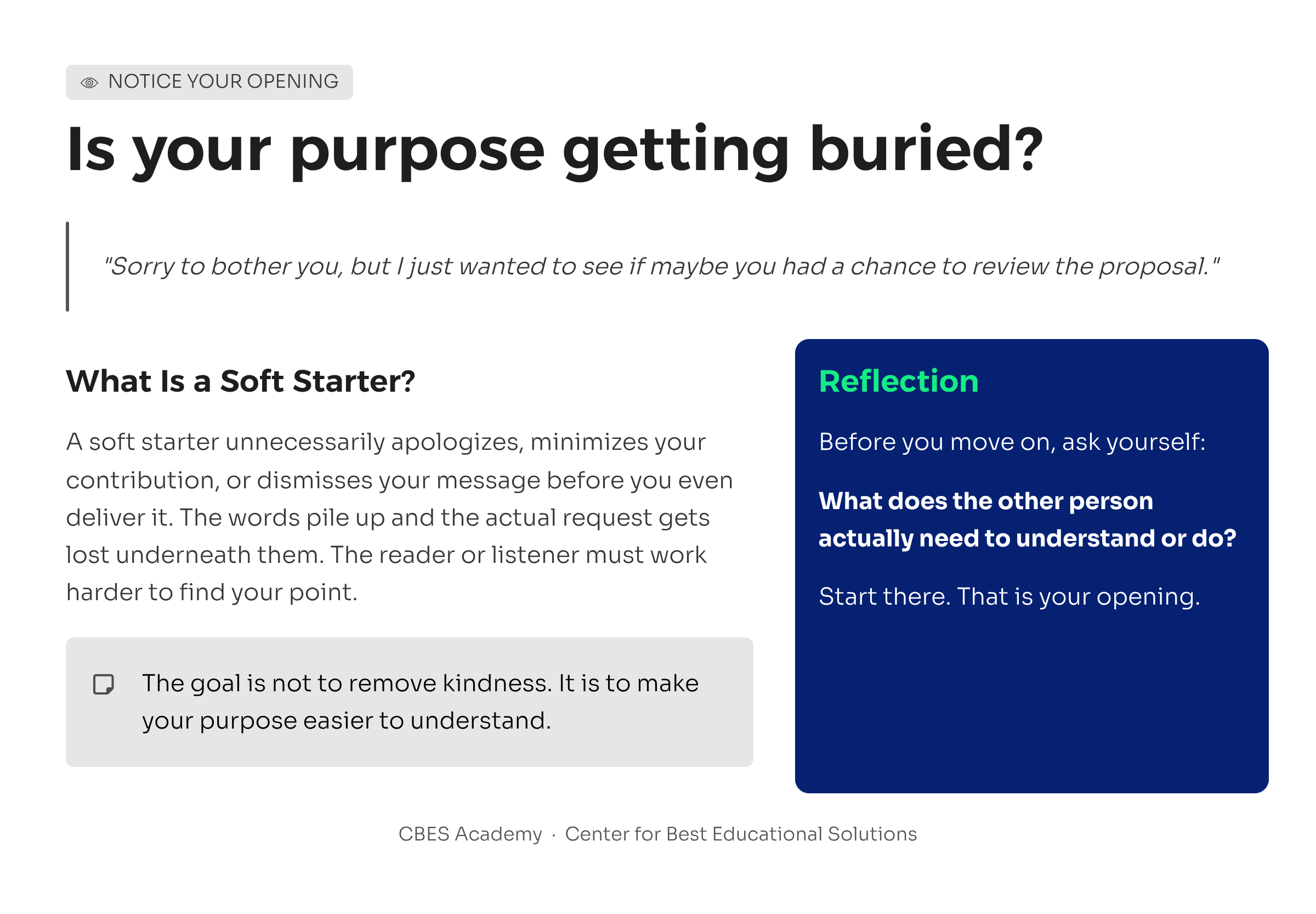
“Sorry to bother you, but I just wanted to see if maybe you had a chance to review the proposal.”


You read it again. You want to sound considerate. You know the other person is busy. You certainly do not want to come across as demanding.


But somewhere between being thoughtful and getting to the point, your request gets buried.


Here is the shift I want you to consider: You can be warm without making your message smaller.


Whether you are leading a team, supporting a client, facilitating a meeting, or having a coaching conversation, clarity and kindness belong together. You do not have to choose one over the other.


What Does it Mean to Start Softly?

In this context, starting softly means opening with language that unnecessarily minimizes your request, questions your contribution, or apologizes for taking up space in a legitimate professional conversation.


It can sound like:

✅ “Sorry to bother you, but…”

✅ “This might be a silly idea…”

✅ “I just wanted to ask…”

✅ “Maybe I’m overthinking this, but…”


These phrases are not forbidden. The point is not to police every word you use or turn every conversation into a performance of confidence.


The question is whether your opening serves your message or gets in its way.


If you need a decision, are you asking for one clearly? If you have a recommendation, are you giving others a fair opportunity to consider it? If a commitment has been missed, are you naming the concern or apologizing for bringing it up?


You can respect the relationship and still state the purpose.

Three Ways to Give Your Message a Stronger Start
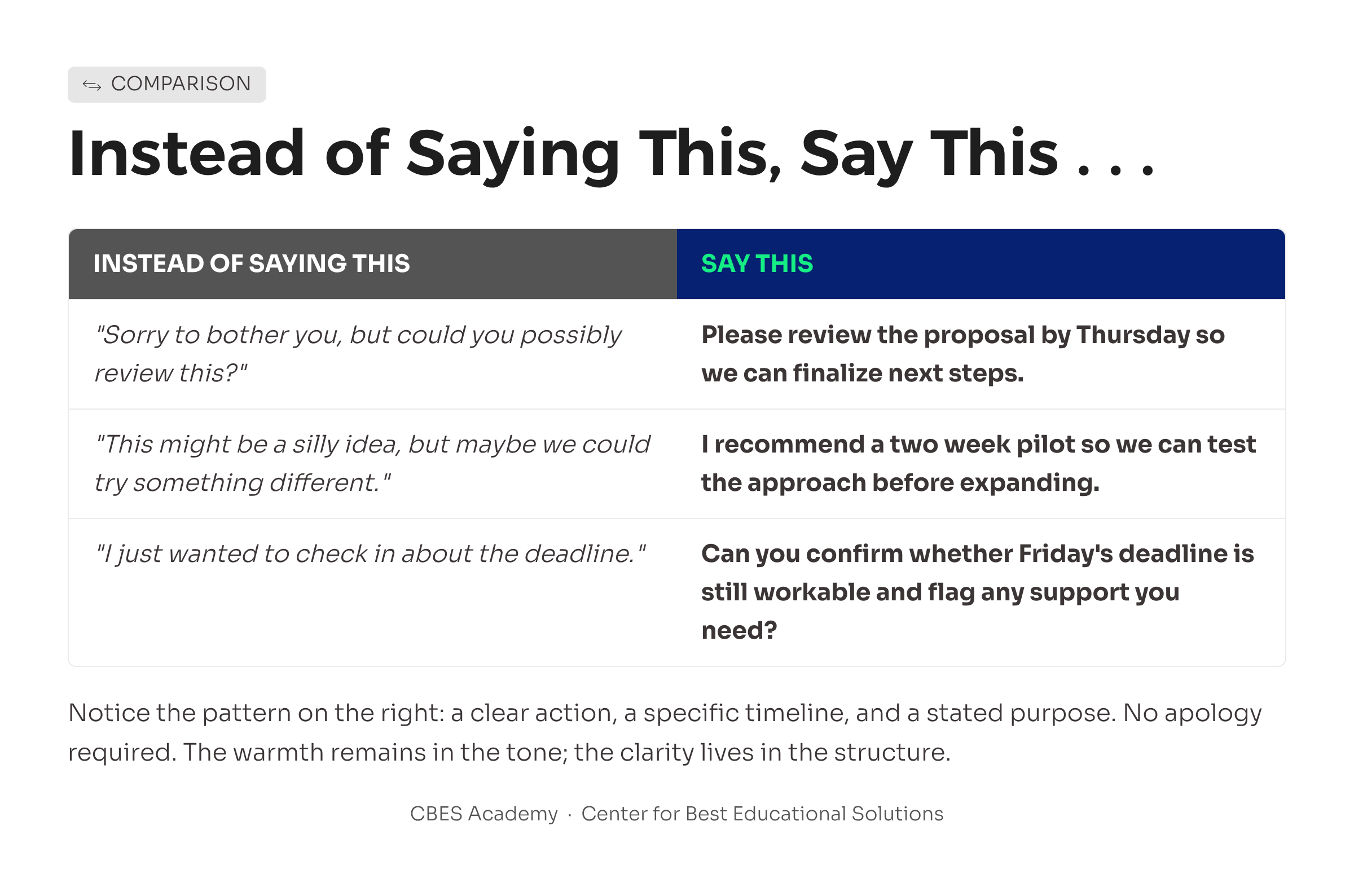

A clearer opening does not have to sound dramatic. Often, it is simply more specific.


1. Make the request without apologizing for it

Instead of: “Sorry to bother you, but could you possibly review this?”


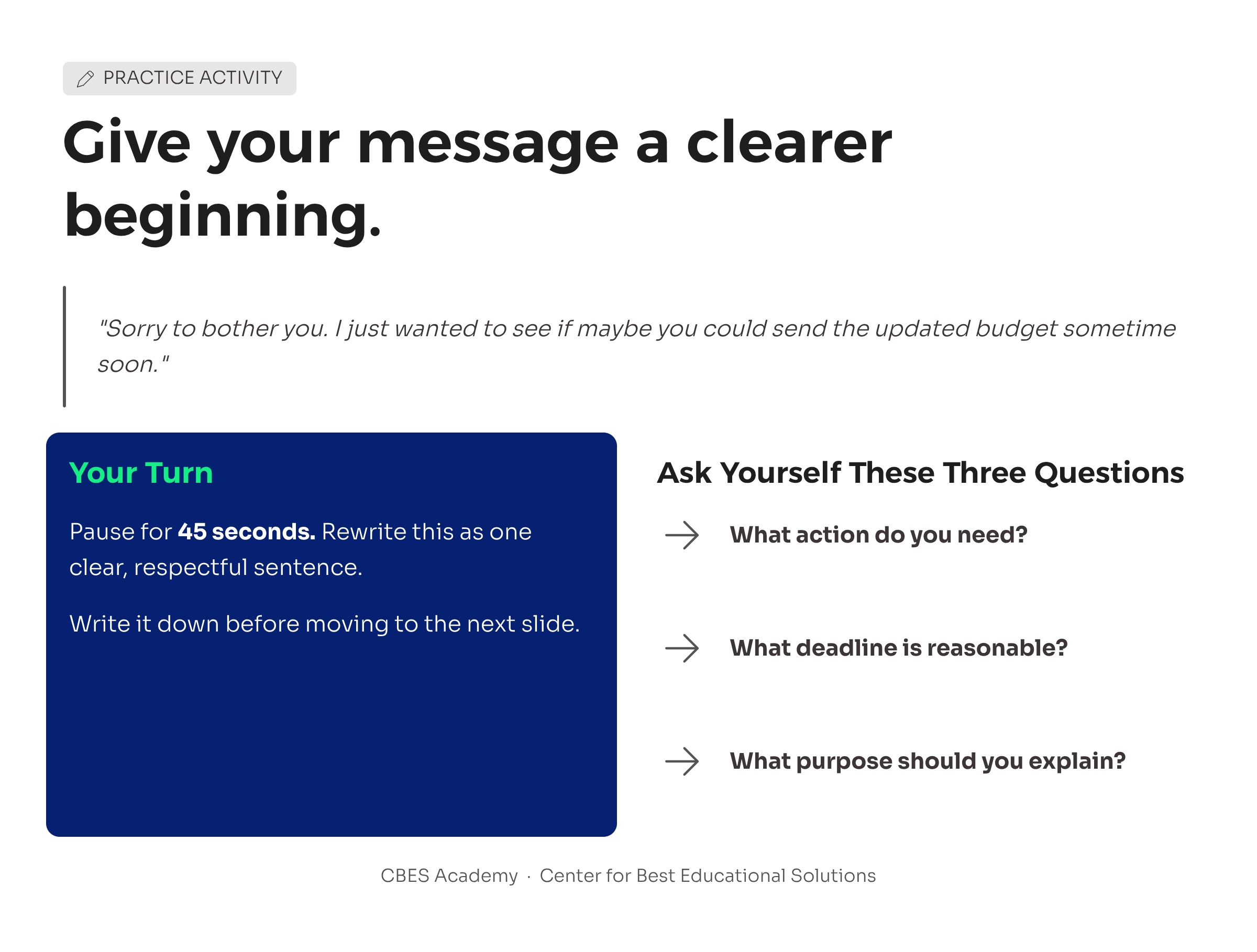
Try: “Please review the proposal by Thursday so we can finalize next steps.”


The revised opening gives the reader a task, a deadline, and a reason. You can still begin with a greeting or a genuine expression of appreciation. You simply do not need to apologize for a reasonable request.


2. Present your recommendation without dismissing it first

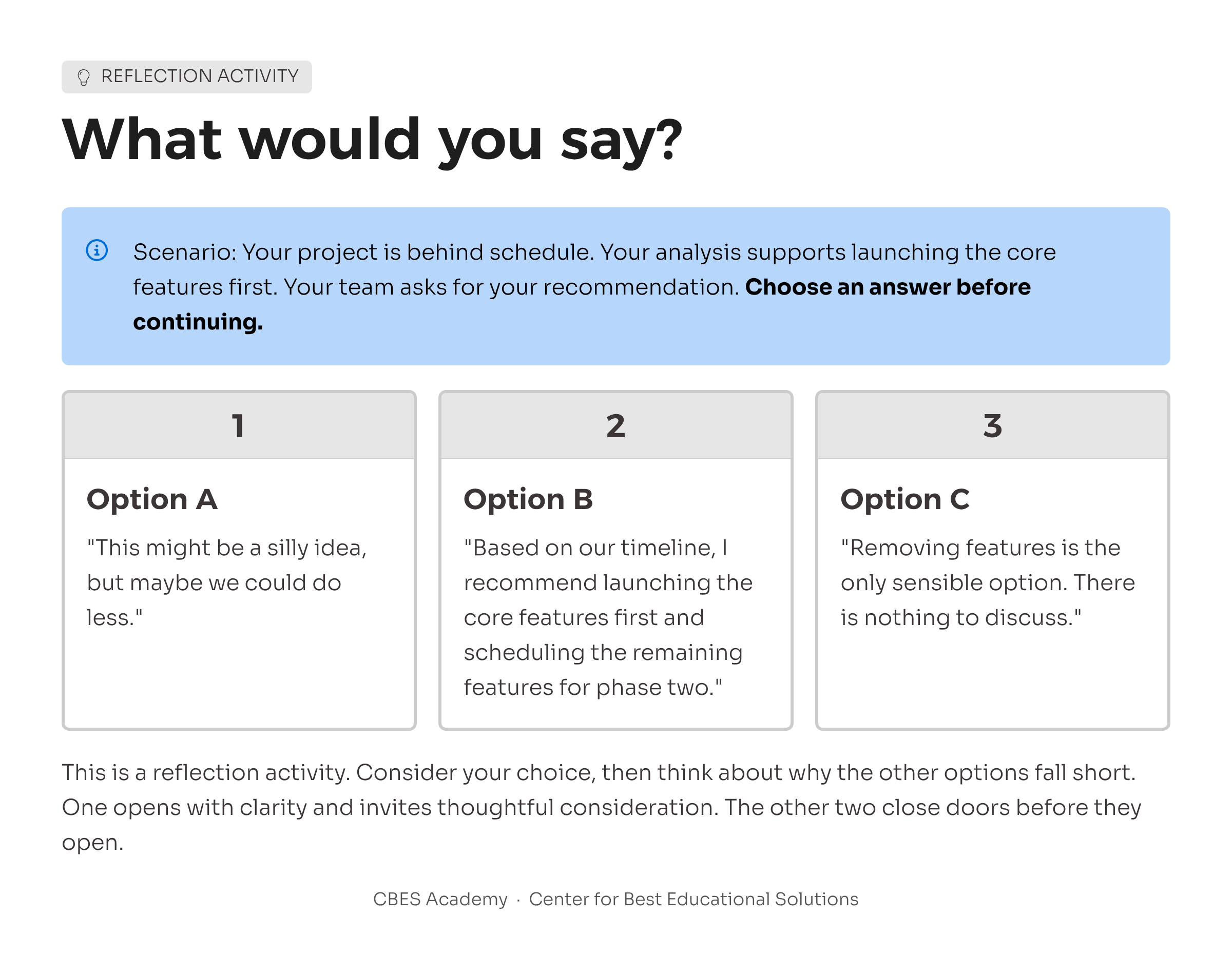
Instead of: “This might be a silly idea, but maybe we could try something different.”


Try: “I recommend a two-week pilot so we can test the approach before expanding.”


Your recommendation does not need to be perfect to deserve consideration. State the idea, explain your reasoning, and leave room for questions.


There is a meaningful difference between inviting feedback and telling people your idea may not be worth hearing.


3. Make your follow-up actionable

Instead of: “I just wanted to check in about the deadline.”


Try: “Can you confirm whether Friday’s deadline is still workable and flag any support you need?”


Now the other person knows what kind of response would be useful. You are asking for clarity while also making room for a conversation about support.


That is not cold. That is purposeful.

Do you like this topic?

  • Enroll in the Micro Lesson

    This is a 10-minute micro-lesson. 
    • Self-Paced Professional Learning
    • Receive a Certificate at the End
    • Reflect on your thoughts
    • Enroll for Free
    • Take the course for Free! 
    • Find the course at the bottom of the page.

Keep the Warmth. Lead with Clarity


The goal is not to replace thoughtful communication with rigid language. It is to make your message easier to understand and respond to.


Here are five principles to practice.


Start with the purpose

Before you write or speak, ask yourself: What do I need this person to understand or do?


Then build your opening around that answer.


For example:

“I’m writing to confirm the next steps for our partnership.”


Or:


“I’d like us to address the handoff process before the next project begins.”


You can provide background after you establish why you are communicating


Here are the three additional questions as a repeatable loop:

Take one email, meeting opener, or coaching question you are preparing to use.


Then:

✅Identify the main request, recommendation, or concern.

✅Notice any unnecessary apologies or statements that dismiss your contribution.

✅Rewrite the first sentence so the purpose is clear.

✅Read it aloud and ask, “Does this sound respectful and direct?”


For example:

“I’m sorry, and maybe I’m overreacting, but I wanted to talk about the last few deadlines.”


Could become:

“The last two handoffs arrived after our agreed dates, which delayed the next step. Let’s identify what is getting in the way and agree on a workable plan.”

You have not removed the care from the conversation. You have given the conversation a clearer place to begin.

Your Message Deserves a Clear Beginning
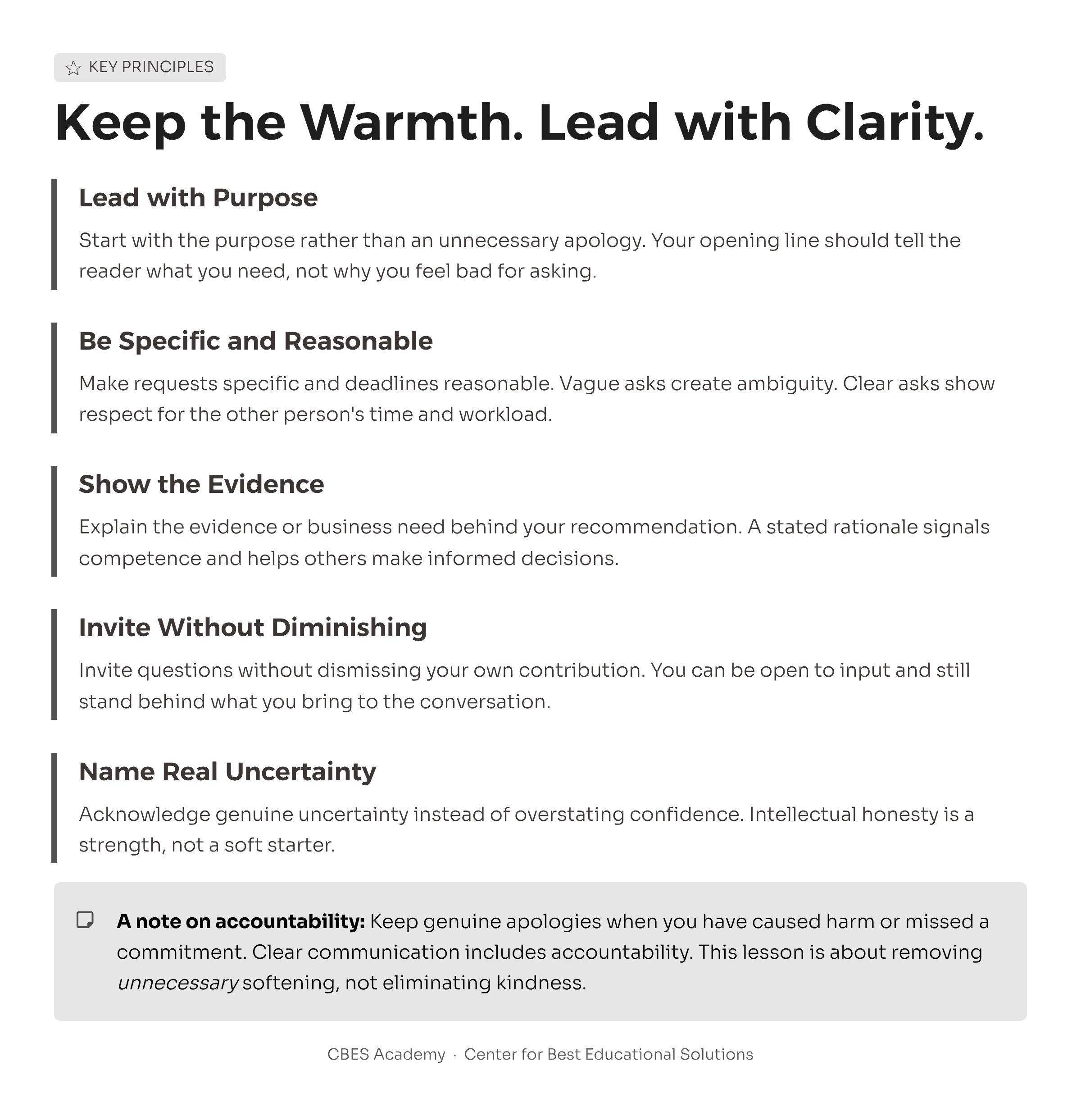
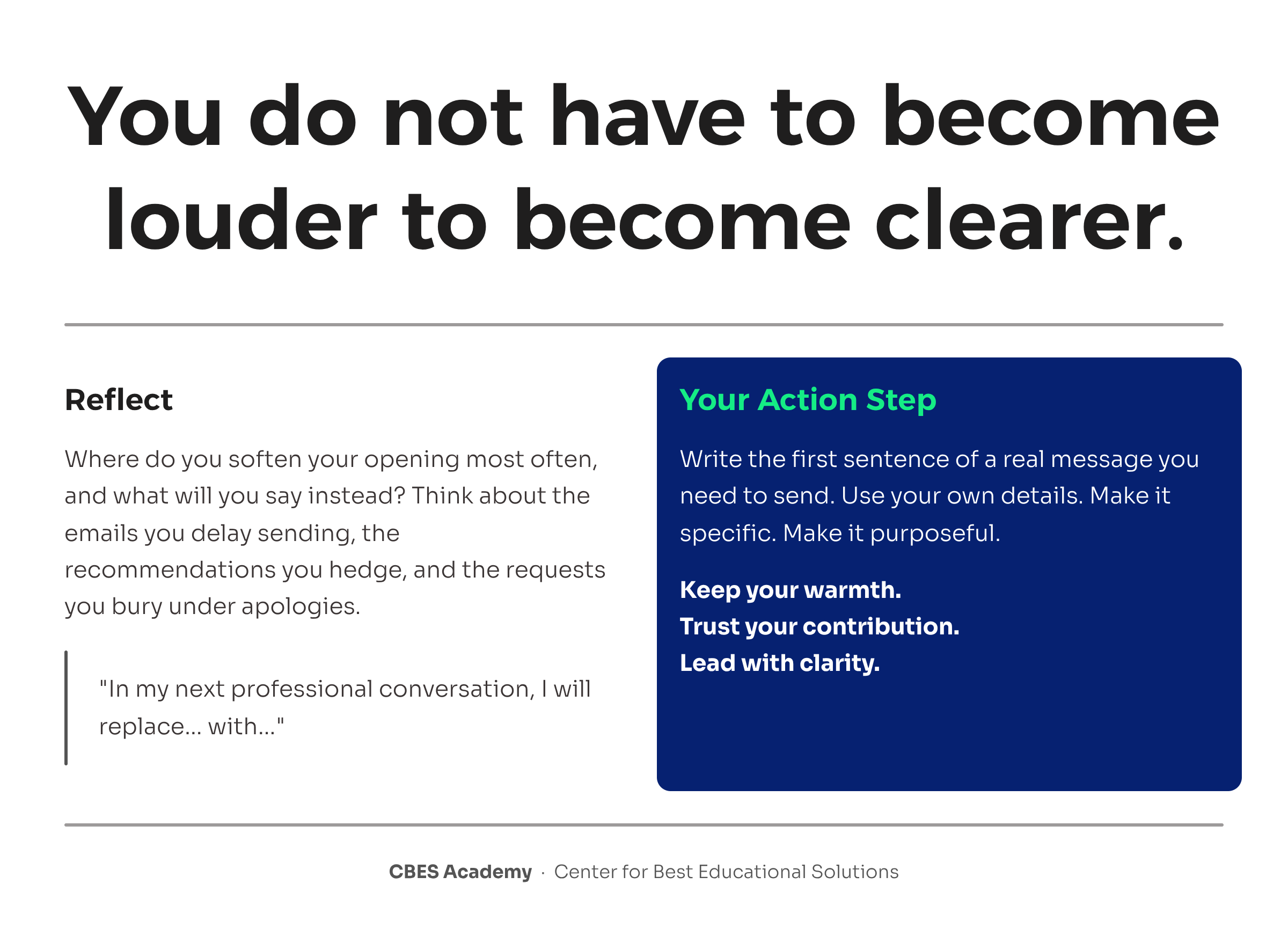
You do not have to become louder, more forceful, or less like yourself.


You can keep your thoughtfulness. Keep your encouragement. Keep your willingness to listen.


Then give your request, recommendation, or concern a clear first sentence.


As you prepare for your next professional interaction, reflect on this:


Where am I softening a message that deserves to be stated clearly, and what will I say instead?


Courses

Created with