Vocabulary
Digitalization
Packaging
Programmable
Effectiveness
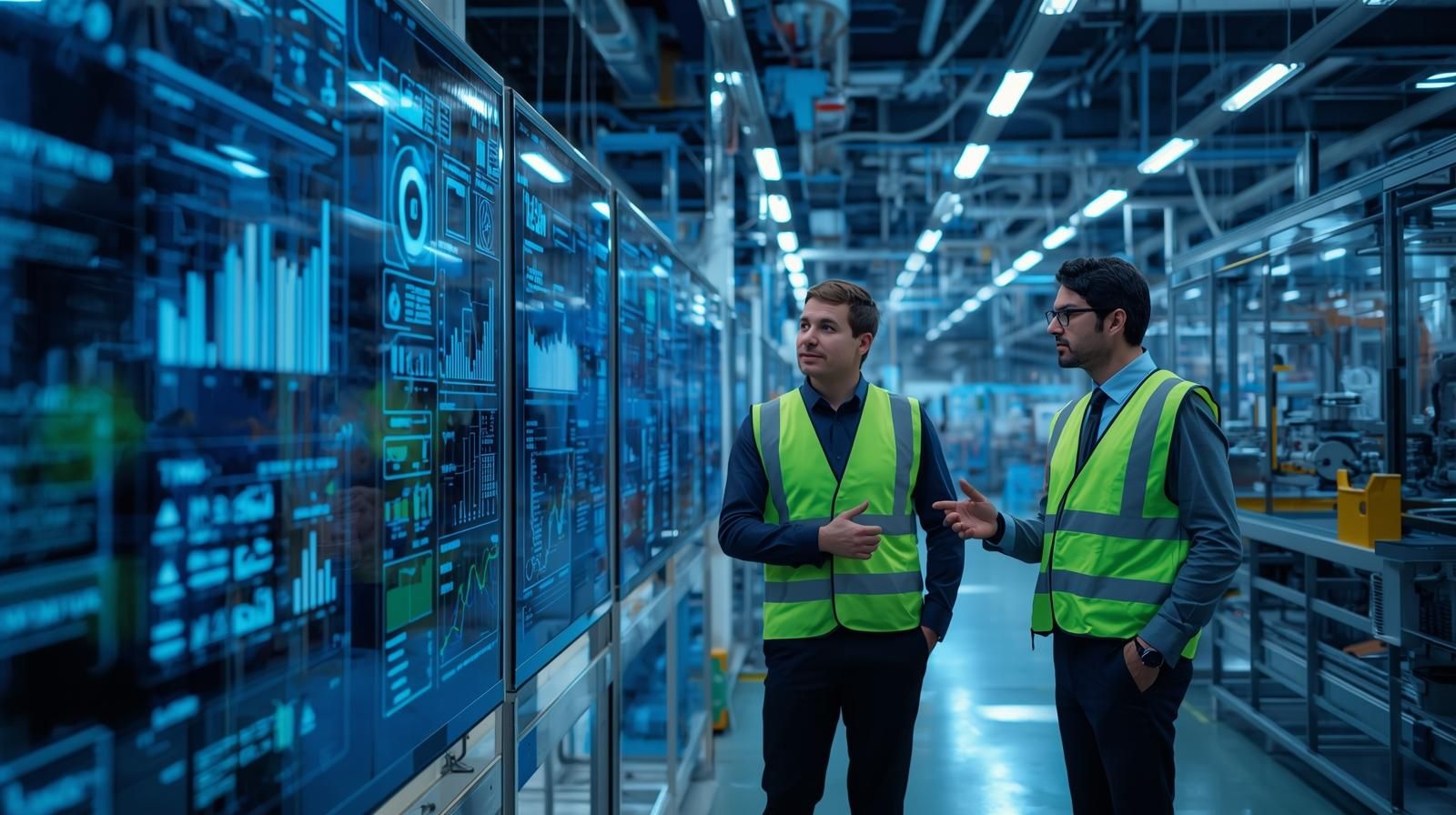
Dashboard
Downtime
digitalization
Digitalization
Using computers and software to collect, store, and use data instead of paper or manual work.
Example Sentence
Digitalization will replace our paper reports.
Example Sentence
Digitalization helps us see data from the machines now.
packaging
Definition
The process of putting products into boxes, bags, or containers so they can be shipped or sold.
Example Sentence
The products go to packaging after production.
Example Sentence
We must check the boxes in packaging.
programmable
Definition
Something that you can set or change with software or buttons to do different jobs.
Example Sentence
The robot is programmable for different tasks.
Example Sentence
This screen is programmable to show many charts.
effectiveness
Definition
How well something works; how much it achieves the result you want.
Example Sentence
Training can improve worker effectiveness.
Example Sentence
We want higher effectiveness on the production line.
dashboard
Definition
A screen that shows important numbers and charts in one place.
Example Sentence
The dashboard shows the data from our machines.
Example Sentence
The dashboard helps us see problems quickly.
downtime
Definition
Time when a machine or production line is stopped and not working.
Example Sentence
We want to reduce downtime in the plant.
Example Sentence
The dashboard shows the total downtime each day.
Please register your warranty online after purchase.
Vocabulary Practice
The Conversation
Eric (Manufacturing Manager): Good morning, thanks for joining. I’d like to discuss our plant’s digitalization project.
Joe (Portugal Colleague): Good Morning! Happy to be here. What are your main goals for digitalization?
Eric: Our goals are to reduce downtime, improve quality tracking, and get real-time data from the production lines.
Joe: Great. Which processes are you planning to start with?
Eric: We will start with Assembly Line 2 and the packaging area. They have the most unplanned stops.
Joe: Do you already collect machine data?
Eric: Some data is manual in spreadsheets. We want to add sensors and connect programmable logic controllers to a dashboard.
Joe: What key performance indicators do you want on the dashboard?
Eric: Overall equipment effectiveness, cycle time, scrap rate, and downtime reasons. Also a daily production target compared to actual production.
Joe: Perfect. Do you have a preferred platform or vendor?
Eric: We are comparing two manufacturing execution system options. We need something simple with good language support.
Joe: Language support is important. Do operators need mobile access?
Eric: Yes, tablets on the floor for alerts and quick checks. Simple screens, big buttons.
Joe: Got it. How will you handle training?
Eric: Short sessions by shift, with visual guides. We will also create a glossary for key terms.
Joe: Sounds good. What is your timeline?
Eric: Pilot in six weeks, then review after four weeks. If results are good, we scale to two more lines.
Joe: What results will define success?
Eric: Ten percent improvement in overall equipment effectiveness, twenty percent faster downtime reporting, and fewer data errors.
Joe: Clear. Any risks we should plan for?
Eric: Network reliability and resistance to change. We will add better wireless coverage and involve team leaders early.
Joe: Excellent. What do you need from me?
Eric: Help setting up the data model and dashboards, and advice on integrating with our enterprise resource planning system.
Joe: I can share templates and best practices. Let’s schedule a workshop next Monday.
Eric: Perfect. I will send a draft agenda and the line layout tomorrow.
Joe: Thank you. Looking forward to working together.
Joe (Portugal Colleague): Good Morning! Happy to be here. What are your main goals for digitalization?
Eric: Our goals are to reduce downtime, improve quality tracking, and get real-time data from the production lines.
Joe: Great. Which processes are you planning to start with?
Eric: We will start with Assembly Line 2 and the packaging area. They have the most unplanned stops.
Joe: Do you already collect machine data?
Eric: Some data is manual in spreadsheets. We want to add sensors and connect programmable logic controllers to a dashboard.
Joe: What key performance indicators do you want on the dashboard?
Eric: Overall equipment effectiveness, cycle time, scrap rate, and downtime reasons. Also a daily production target compared to actual production.
Joe: Perfect. Do you have a preferred platform or vendor?
Eric: We are comparing two manufacturing execution system options. We need something simple with good language support.
Joe: Language support is important. Do operators need mobile access?
Eric: Yes, tablets on the floor for alerts and quick checks. Simple screens, big buttons.
Joe: Got it. How will you handle training?
Eric: Short sessions by shift, with visual guides. We will also create a glossary for key terms.
Joe: Sounds good. What is your timeline?
Eric: Pilot in six weeks, then review after four weeks. If results are good, we scale to two more lines.
Joe: What results will define success?
Eric: Ten percent improvement in overall equipment effectiveness, twenty percent faster downtime reporting, and fewer data errors.
Joe: Clear. Any risks we should plan for?
Eric: Network reliability and resistance to change. We will add better wireless coverage and involve team leaders early.
Joe: Excellent. What do you need from me?
Eric: Help setting up the data model and dashboards, and advice on integrating with our enterprise resource planning system.
Joe: I can share templates and best practices. Let’s schedule a workshop next Monday.
Eric: Perfect. I will send a draft agenda and the line layout tomorrow.
Joe: Thank you. Looking forward to working together.
The Follow-Up Email
- Subject: Follow-up on the Plant Digitalization Meeting: Summary and Next Steps
Dear Joe,
Thank you for meeting today. Here is a quick recap:
Thank you for the productive discussion today. Here’s a brief recap and the plan forward.
Summary of discussion
- Our goals: reduce downtime, improve quality checks, and see real-time data.
- Scope: start with Assembly Line 2 and the packaging area.
- Data: move from manual spreadsheets to sensors and programmable logic controllers with a dashboard.
- Measures: overall equipment effectiveness, cycle time, scrap rate, downtime reasons, and daily target vs. actual.
- Plan: pilot in six weeks, review after four weeks, then maybe add two more lines.
Next steps
- I will send you the draft agenda and line layout tomorrow.
- You will share your templates and best practices for the data model and dashboards.
- I will send a calendar invite for a workshop next Monday.
Questions
- Which systems do you think we should compare? Do your templates support more than one language?
- How do you usually connect programmable logic controllers to the dashboard in a safe way?
- What time is best for you on Monday?
Sincerely,
Eric
Discussion Questions
1. What were the main goals of the digitalization project in the email?
2. Which areas of the plant are included in the first phase of the project, and why were they chosen?
3. How will data collection change after the project (before vs. after)?
4. What key performance indicators will be used to measure success, and why are they important?
5. What is the proposed timeline for the pilot and the review?
6. What specific responsibilities does the manufacturing manager have in the next steps?
7. What specific responsibilities does the Portugal colleague have in the next steps?
8. What risks or challenges might appear when moving from manual spreadsheets to automated dashboards?
9. Why does the manager ask questions about manufacturing execution system platforms and templates?
10. If you were Joe, how would you respond to this follow-up email? What information would you include?
2. Which areas of the plant are included in the first phase of the project, and why were they chosen?
3. How will data collection change after the project (before vs. after)?
4. What key performance indicators will be used to measure success, and why are they important?
5. What is the proposed timeline for the pilot and the review?
6. What specific responsibilities does the manufacturing manager have in the next steps?
7. What specific responsibilities does the Portugal colleague have in the next steps?
8. What risks or challenges might appear when moving from manual spreadsheets to automated dashboards?
9. Why does the manager ask questions about manufacturing execution system platforms and templates?
10. If you were Joe, how would you respond to this follow-up email? What information would you include?
Answers for Missing Word Sentences:
1. digitalization
2. packaging
3. programmable
4. effectiveness
5. dashboard
6. downtime
What were the main goals of the digitalization project in the email?
To reduce downtime, improve quality tracking, and get real-time production data from the lines.
Which areas of the plant are included in the first phase of the project, and why were they chosen?
Assembly Line 2 and the packaging area, because they have the most unplanned stops.
How will data collection change after the project (before vs. after)?
Before: data is manual in spreadsheets.
After: data comes automatically from sensors and programmable logic controllers into dashboards.
What key performance indicators will be used to measure success, and why are they important?
Overall equipment effectiveness, cycle time, scrap rate, downtime reasons, and daily target vs. actual. They show how well the line runs, how much is wasted, and where problems happen.
What is the proposed timeline for the pilot and the review?
Start the pilot in six weeks, review after four weeks, then expand to two more lines if results are good.
What specific responsibilities does the manufacturing manager have in the next steps?
Send the draft agenda and line layout, schedule the workshop and invite people, and lead work on the data model and training.
What specific responsibilities does the Joe, the Portugal colleague have in the next steps?
Share templates and best practices, give advice on dashboards and integration with the enterprise resource planning system, and suggest manufacturing execution system platforms.
What risks or challenges might appear when moving from manual spreadsheets to automated dashboards?
Network problems, people resisting change, mistakes in setup or data, and not enough wireless coverage on the shop floor.
Why does the manager ask questions about manufacturing execution system platforms and templates?
To choose the right system, use proven examples, support multiple languages, and save time by reusing good designs.
If you were Joe, how would you respond to this follow-up email? What information would you include?
Confirm the summary, answer the questions (recommend platforms, explain templates and security approach), confirm the time for the workshop, and maybe add any risks or ideas from his side.
1. digitalization
2. packaging
3. programmable
4. effectiveness
5. dashboard
6. downtime
What were the main goals of the digitalization project in the email?
To reduce downtime, improve quality tracking, and get real-time production data from the lines.
Which areas of the plant are included in the first phase of the project, and why were they chosen?
Assembly Line 2 and the packaging area, because they have the most unplanned stops.
How will data collection change after the project (before vs. after)?
Before: data is manual in spreadsheets.
After: data comes automatically from sensors and programmable logic controllers into dashboards.
What key performance indicators will be used to measure success, and why are they important?
Overall equipment effectiveness, cycle time, scrap rate, downtime reasons, and daily target vs. actual. They show how well the line runs, how much is wasted, and where problems happen.
What is the proposed timeline for the pilot and the review?
Start the pilot in six weeks, review after four weeks, then expand to two more lines if results are good.
What specific responsibilities does the manufacturing manager have in the next steps?
Send the draft agenda and line layout, schedule the workshop and invite people, and lead work on the data model and training.
What specific responsibilities does the Joe, the Portugal colleague have in the next steps?
Share templates and best practices, give advice on dashboards and integration with the enterprise resource planning system, and suggest manufacturing execution system platforms.
What risks or challenges might appear when moving from manual spreadsheets to automated dashboards?
Network problems, people resisting change, mistakes in setup or data, and not enough wireless coverage on the shop floor.
Why does the manager ask questions about manufacturing execution system platforms and templates?
To choose the right system, use proven examples, support multiple languages, and save time by reusing good designs.
If you were Joe, how would you respond to this follow-up email? What information would you include?
Confirm the summary, answer the questions (recommend platforms, explain templates and security approach), confirm the time for the workshop, and maybe add any risks or ideas from his side.
Are you interested in more articles or lessons related to this subject? Contact us for more information.
Thank you!
Latest from our blog
Courses
Created with